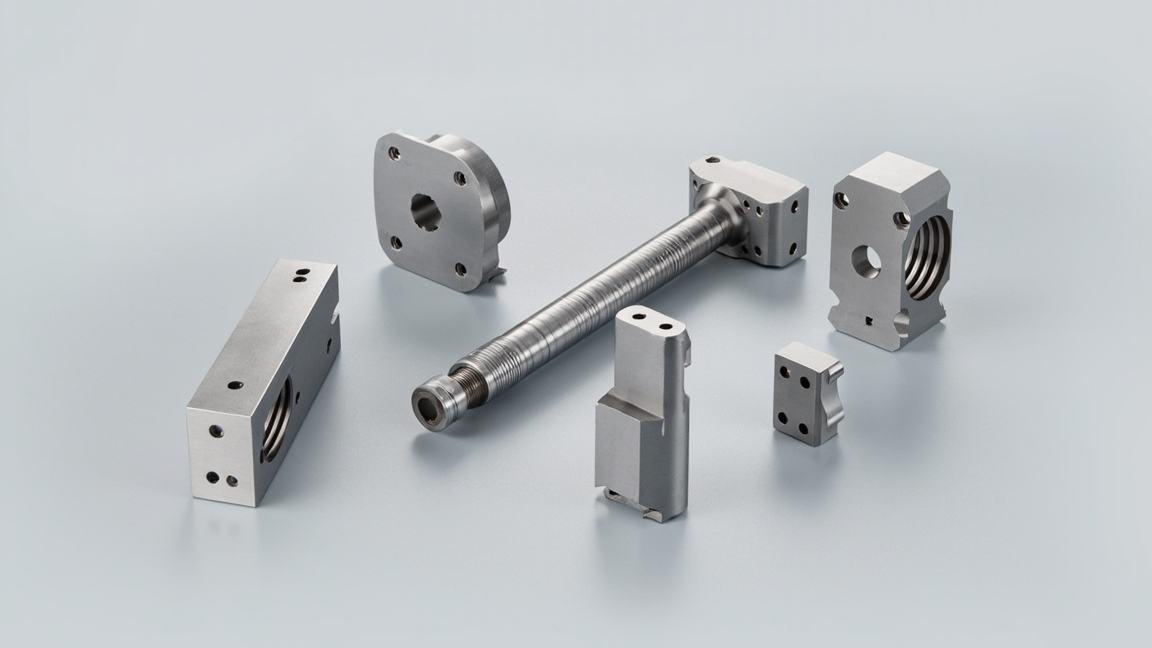
If you've been on a factory tour in China, you've probably heard "oh, we have 5-axis machines" at least three times. It's the default sales pitch. But here's the thing — most parts don't actually need 5-axis machining. Forcing a 3-axis job onto a 5-axis machine is just expensive.
After machining 50,000+ parts on our 5-axis AF-C250 machines, here's how we think about the 3-axis vs 5-axis decision.
When 3-axis is the right choice
Use 3-axis when:
- The part can be held in one orientation — no features on opposite sides that would need re-fixturing
- All features are accessible from the top (with a few sides via 4th axis if available)
- Cycle time is acceptable (under 30 minutes typical for small to medium parts)
3-axis is also the right choice when your part is small and the production volume is high — the lower per-machine-hour cost dominates the decision.
When 5-axis pays off
5-axis becomes worth the 2-3× hourly premium when ANY of these apply:
- Multiple complex sides — impellers, blisks, manifolds with intersecting ports
- Undercuts — features that would otherwise need EDM or special tooling
- Tight tolerance relationships between features on different sides — 5-axis lets you cut everything in one setup, eliminating re-fixturing errors
- Cycle time matters — 5-axis can cut complex parts in one setup where 3-axis needs multiple
Real example: hydraulic manifold
A German auto supplier came to us with a hydraulic manifold that was being machined on 3-axis with 4 separate setups (and 4 chances for fixture error). Switching to 5-axis cut cycle time by 47% and tightened the position tolerance from ±0.1 mm to ±0.03 mm.
The setup-time savings alone justified the 5-axis premium on a 500-piece production run.
Bottom line
Don't pay for 5-axis you don't need. But don't accept 3-axis if your part really needs 5-axis either — the quality and cycle-time benefits compound on every production run.
When in doubt, send us your STEP file. We'll evaluate and recommend the right setup with cycle-time estimates for both options.
Need this sized for your line?
Send material, throughput target and lead time. An application engineer replies with a machine recommendation within 24 hours.
Talk to an engineer